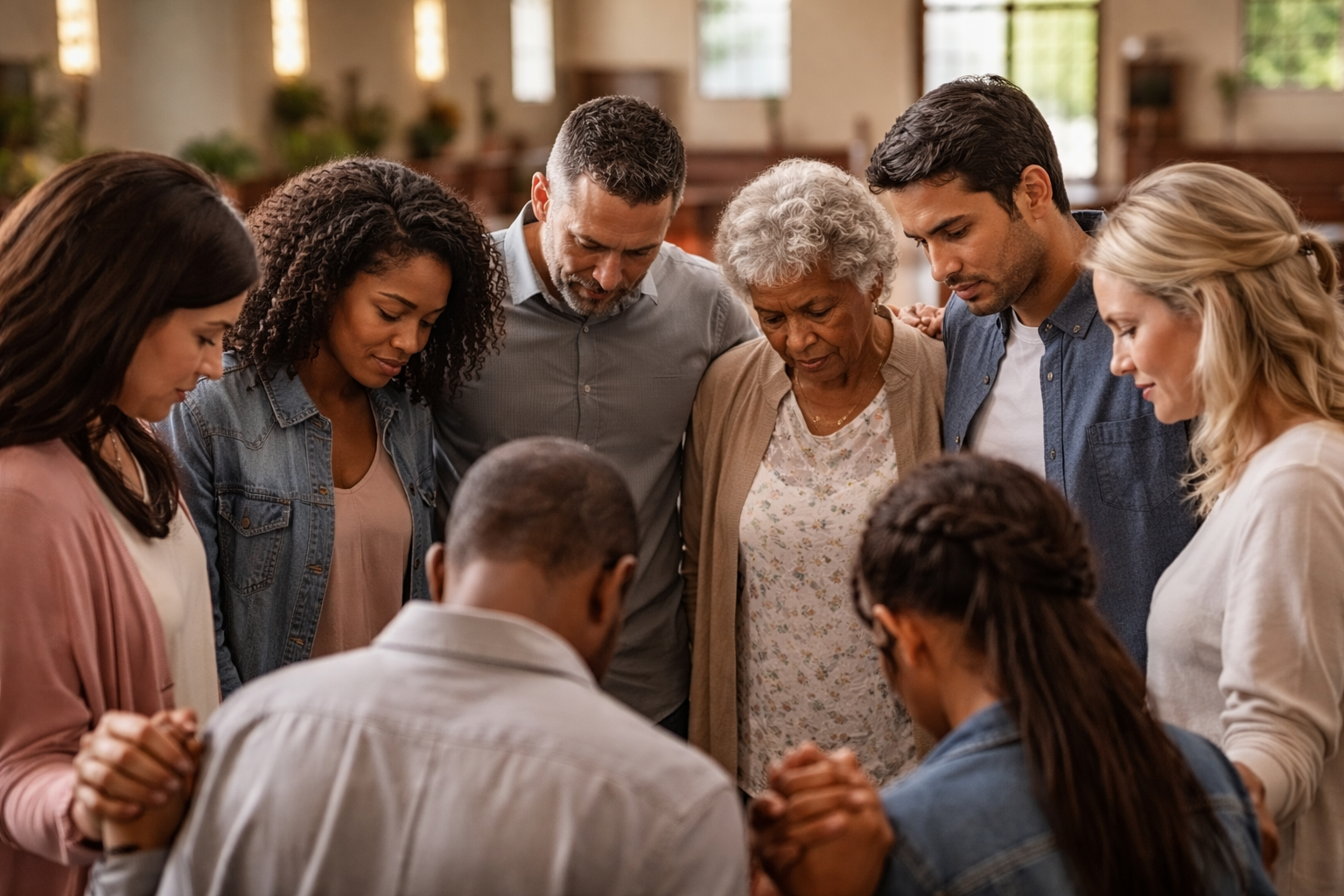
Many believers sincerely love God yet quietly attempt to grow in isolation, unaware that spiritual maturity was never designed to flourish alone. They attend when possible, listen to sermons, read Scripture privately, and pursue personal holiness—yet still experience a persistent tension: they are spiritually hungry, but relationally unrooted. The heart is sincere, but the life feels unstable. The faith is real, but the formation is inconsistent.
When Spiritual Sincerity Meets Relational Unrootedness
This internal tension often shows up in subtle ways:
- You love Christ, but your spiritual life feels like a private project.
- You can explain doctrine, yet struggle to sustain disciplined rhythms.
- You desire purpose, but lack relational reinforcement and accountability.
- You want to serve, but feel disconnected from shared responsibility.
- You long for maturity, yet you keep meeting the limits of isolated growth.
The church, in God’s wisdom, is not simply a gathering you attend; it is a spiritual environment designed to form you—to stabilize your faith, strengthen your responsibility, and mature your life through belonging, fellowship, mentorship, and Kingdom participation. This is why the church must function as a shepherding pathway, guiding a person from visitor to disciple, and from disciple to entrusted leader.
Pastoral Recognition
If you have attempted to grow alone, you are not unusual—and you are not condemned.
Modern life trains people toward independence: busy schedules, fragmented relationships, private spirituality, and digital consumption. Many believers have also been wounded by church experiences and conclude, “I will keep my faith, but avoid deep involvement.” Others carry responsibility in work and family and assume that consistent participation in spiritual community is a luxury rather than a necessity.
Yet the pattern of Scripture is clear: God saves individuals, but He forms a people. He does not merely rescue us from sin; He places us into a spiritual household where love becomes practice, holiness becomes embodied, and maturity becomes visible through shared life.
So if you feel the tension—loving God but struggling to thrive in isolation—receive this as gentle wisdom: the answer is not guilt-driven attendance; the answer is Spirit-led belonging.
Biblical Foundation
Anchor Scripture — Hebrews 10:24–25 (NKJV)
“And let us consider one another in order to stir up love and good works, not forsaking the assembling of ourselves together… but exhorting one another…”
This is not a command to fill seats; it is a call to mutual strengthening. The phrase “consider one another” carries deliberate attention: believers are meant to think about each other’s growth and create conditions where love and good works become normal.
Supporting Passages
- Acts 2:42–47 (NKJV) — The early church “continued steadfastly” in doctrine, fellowship, breaking of bread, and prayers. Doctrine and fellowship are companions: truth shapes community, and community embodies truth. The fruit was stability, generosity, shared life, and public credibility.
- Ephesians 4:11–16 (NKJV) — God gives leadership gifts “for the equipping of the saints… for the edifying of the body,” until believers grow into maturity. Growth is corporate strengthening; maturity happens as each part does its share.
- 1 Corinthians 12:12–27 (NKJV) — The church is the Body of Christ: integrated, interdependent, and strengthened through connection rather than detachment.
- John 13:34–35 (NKJV) — Love is practiced covenant in community; isolation may preserve comfort, but it cannot fully practice Christ’s command to love.
- Ecclesiastes 4:9–12 (NKJV) — Two are better than one: spiritual endurance is often strengthened through shared support and mutual lifting.
Theologically, this means: the church is one of God’s primary instruments of formation. Not because God is limited, but because God is wise. He forms humility through relationships, faithfulness through consistency, maturity through responsibility, and love through fellowship. Spiritual growth is personal, but it is not private.
Formation Framework
Below is a structured framework to help you see how God forms believers through church life—not as mere attendance, but as a stabilizing environment of discipleship and responsibility.
1) The Theology of Fellowship: More Than Friendship
Biblical grounding: Acts 2:42; 1 John 1:7
Fellowship in Scripture is not social warmth; it is shared participation in Christ. The term carries partnership, communion, and mutual investment. True fellowship includes encouragement, correction, prayer, truth-sharing, and practical care.
Explanation: Friendship can be optional; fellowship is covenantal. Friendship may connect personalities; fellowship connects destinies in Christ. In fellowship, your faith becomes lived—not merely believed.
Leadership insight: A church becomes spiritually stable when fellowship is structured, clear, and purposeful—so that believers are not drifting as anonymous attendees, but becoming known, strengthened, and formed.
Life application: Ask yourself: Where am I spiritually known? Who can recognize when my joy is fading or my discipline is slipping? If the answer is “no one,” your growth is unnecessarily exposed.
A practical next step is to spiritual growth in community through church connection.
2) Mentorship as Spiritual Formation: Growth Has a Shape
Biblical grounding: 2 Timothy 2:2; Titus 2:1–8
Paul’s model is generational: what you received must be entrusted. Spiritual maturity is not only information; it is formation through guided practice and example.
Explanation: Mentorship does not replace the Holy Spirit; it cooperates with the Holy Spirit. God often forms believers through wise voices, mature examples, and consistent shepherding. Many believers plateau not because they lack desire, but because they lack relational training.
Leadership insight: In healthy church life, mentorship is not celebrity-driven. It is ordinary maturity made available—older helping younger, stable strengthening unstable, experienced guiding emerging.
Life application: If you are newer to faith, begin with clarity and stability rather than self-directed complexity. A wise starting point is spiritual growth in community through start foundations.
If you are already stable, consider: Who am I helping? Who am I strengthening? In the Kingdom, maturity becomes visible when you begin carrying others.
3) Shared Responsibility in the Body: Formation Becomes Visible
Biblical grounding: Ephesians 4:16; 1 Corinthians 12
Scripture teaches that the Body is built up “as each part does its share.” In other words, contribution is not merely volunteering—it is a formation mechanism.
Explanation: Many believers want growth without responsibility. Yet responsibility is often the furnace where maturity becomes real. When you serve, you learn patience. When you commit, you learn faithfulness. When you carry a role, you learn integrity. In shared responsibility, character is tested and strengthened.
Leadership insight: A church is not strong because it has gifted individuals; it is strong because it has formed disciples—people who carry responsibility with humility and consistency.
Life application: Your question should not only be “What did I receive today?” but also “What am I building with my life?” The church becomes stable when believers see themselves not as consumers, but as contributors to spiritual culture.
To explore meaningful participation within the Body, take your next step toward spiritual growth in community through church connection.
4) Stability Through Belonging: The Church as a Spiritual Environment
Biblical grounding: Psalm 92:13–14; Hebrews 3:13
“Those who are planted in the house of the LORD… shall still bear fruit.” Planting is not casual visiting; it is rootedness. Stability grows where believers are consistently present within a healthy spiritual environment.
Explanation: Belonging does not mean perfection; it means covenantal presence. It is the decision: “I will be formed here. I will grow here. I will be strengthened here.” In such an environment, spiritual habits become sustainable because the community supports your growth.
Leadership insight: When the church functions as a shepherding pathway (not an announcement platform), it helps people move from uncertainty to clarity, from isolation to family, and from attendance to discipleship.
Life application: If your spiritual life is unstable, do not only adjust your private routine—also strengthen your spiritual environment. God often matures believers by placing them among ordered, faithful people.
If you want a clear, structured starting point for growth, you can spiritual growth in community through discipleship pathway.
5) Community That Strengthens Calling: Maturity Before Influence
Biblical grounding: Acts 13:1–3; 1 Peter 5:2–3
Calling is strengthened in community. Even Paul and Barnabas were sent from a gathered spiritual environment. Mature calling is not self-appointed; it is recognized, tested, and entrusted.
Explanation: Many believers feel called, but remain unformed. Community provides testing: consistency, humility, teachability, and service. This is protection, not limitation. Calling without formation produces strain; calling with formation produces fruit.
Leadership insight: Healthy church life does not rush people into platforms; it forms them into responsibility. The goal is not visibility; it is maturity.
Life application: Ask: Is my life stable enough to carry the influence I desire? If not, your next step is not to promote your gift—it is to deepen your formation through belonging and service.
Ordered Life Integration: Why Structure Protects Spiritual Maturity
Stable communities are built by believers whose lives are intentionally ordered.
An ordered life is not rigid control; it is spiritual alignment—placing your commitments under God’s governance. When a believer’s life lacks structure, everything becomes reactive: attendance becomes inconsistent, prayer becomes occasional, service becomes optional, and relationships become shallow.
But when life is ordered:
- Consistency becomes possible.
- Accountability becomes normal.
- Growth becomes measurable.
- Responsibility becomes joyful rather than burdensome.
This is one of the quiet reasons church life matters: community strengthens order. The rhythms of worship, fellowship, discipleship, and serving become rails that guide your life into maturity.
If you want clarity about spiritual foundations and doctrine that supports ordered living, ground yourself in spiritual growth in community through doctrinal foundations.
Practical Formation Guidance
The goal is not inspiration—it is participation through consistent rhythms. Below are practical steps that move you from isolated sincerity into embodied formation.
Reflection Questions
- Where have I been trying to mature alone, without meaningful spiritual relationships?
- What pattern do I repeat when my life becomes pressured—withdrawal, inconsistency, or drifting?
- What would stable belonging look like for my family, my faith, and my future?
- Who has permission to speak truth into my life with love and clarity?
- In what practical way can I begin carrying responsibility within the Body?
Relational Practices
- Choose one consistent community rhythm (weekly worship and fellowship) and protect it like spiritual oxygen.
- Move from anonymity to presence by learning names, serving practically, and practicing “consider one another” (Hebrews 10).
- Practice spiritual conversation, not only social conversation: ask believers how they are doing in prayer, Scripture, and obedience.
- Invite correction by asking a mature believer, “What do you see in me that I should strengthen?”
Community Engagement Steps
Mentorship Encouragement
Mentorship begins with humility and consistency. It is difficult to mentor someone who appears and disappears. If you desire guidance, begin by becoming present, dependable, and teachable.
Leadership Applications
- Do not measure growth by how much you know; measure it by how consistently you obey.
- Do not chase influence; pursue formation.
- Do not rush for platforms; commit to serving.
Leaders are formed where character is tested—inside faithful community.
Why Spiritual Growth Was Never Meant to Happen in Isolation
Spiritual growth becomes sustainable when it moves from a private intention to a shared environment. A believer may love God deeply, yet still lack the structure that makes faith resilient over time. Community supplies what isolation cannot:
- Reinforcement: others strengthen your resolve when pressure increases.
- Correction: loving truth prevents slow drift.
- Rhythm: consistent gatherings and shared practices stabilize the soul.
- Responsibility: serving turns faith into embodied maturity.
- Family: belonging heals the “unanchored believer” experience.
This is why a healthy church does not merely host services; it shepherds a journey—from visitor to believer, from believer to growing member, from growing member to serving disciple, and from serving disciple to entrusted leader.
Next Steps for Spiritual Growth in Community
Choose one faithful step this week. Belonging becomes stability when it is practiced consistently, not occasionally.
Leadership Closing
Spiritual maturity rarely flourishes in isolation — it is strengthened within a community of ordered lives.
community
fellowship
church life
spiritual growth
belonging