1) Opening — Name the Internal Tension
Many believers sincerely desire to serve God yet quietly wonder where they fit—unaware that calling is often clarified through faithful service.
They want to contribute with integrity, but they resist becoming busy without direction. They sense that ministry should be more than tasks, yet
they also know maturity cannot remain theoretical.
This tension is not a small matter. It touches identity, purpose, fear of misplacement, and the desire to serve without performing.
Some believers hesitate because they do not want visibility without substance. Others hesitate because they fear being used, misunderstood,
or placed in roles that do not reflect their design. And some hesitate because they associate service with pressure rather than formation.
But Scripture does not treat service as optional decoration. It presents service as the normal expression of a mature life—ordered under Christ,
stewarding gifts faithfully, contributing to the building up of the Body, and learning responsibility as a spiritual discipline.
2) Pastoral Recognition
Uncertainty about one’s place in ministry is common—and often signals readiness for deeper formation. Mature believers are rarely careless about
responsibility. The very fact that you want to serve well, without pretending, suggests that your conscience is alive and your discernment is functioning.
In many cases, the question “Where do I fit?” is not evidence of confusion; it is evidence of seriousness. People who seek visibility ask,
“Where can I be seen?” People who seek maturity ask, “Where can I become faithful?”
A shepherd does not force direction on a sincere believer. He forms them into stability, helps them interpret Scripture wisely,
and guides them into service that strengthens the church rather than consuming the servant. You do not need pressure to serve;
you need clarity about what service truly is.
3) Biblical Foundation
Anchor Scripture
1 Peter 4:10–11 — “As each has received a gift, use it to serve one another, as good stewards of God’s varied grace…”
Peter does not describe gifts as personal trophies. He calls believers stewards—managers of grace entrusted to them for the benefit of others.
In other words, gifting is not primarily about self-expression; it is about faithful administration. Service is the environment where stewardship becomes measurable,
character becomes visible, and maturity becomes tangible.
Supporting Passages (with interpretation)
-
Mark 10:43–45 — Jesus teaches that greatness in His Kingdom is not defined by rank but by servanthood.
This is not a motivational slogan; it is a definition of spiritual leadership. In Christ’s order, authority is validated by humility,
and influence is purified through service. A believer who will not serve cannot be trusted with weight.
-
1 Corinthians 12:12–27 — Paul presents the church as a body, not a crowd. Each member belongs, contributes, and supports the whole.
The implication is profound: ministry is not an extra role for a few; it is the normal life of the body. When members do not function, the body suffers.
When members mature into contribution, the body strengthens.
-
Matthew 25:14–30 (Parable of the Talents) — Jesus reveals that God evaluates faithfulness with what was entrusted, not excuses about fear or comparisons.
The servant who hid his talent did not commit a scandal—he committed neglect. The Kingdom does not reward potential; it rewards stewardship.
Service is one of the primary places stewardship is expressed.
-
Ephesians 4:11–16 — Christ gives leaders to equip the saints for the work of ministry so that the body grows into maturity.
This overturns the idea that “ministry” is only what leaders do. The saints are equipped so that the whole church becomes stable, discerning, and fruitful.
In this passage, service is directly connected to maturity, unity, and growth into Christ.
-
Colossians 3:23–24 — “Whatever you do, work heartily, as for the Lord…”
Paul dignifies ordinary service. Not every assignment is glamorous, but every act can be holy when offered to Christ.
The standard is not attention; the standard is faithfulness before God.
Theological summary: Service is not a church management strategy. It is a Kingdom pattern—where gifts are stewarded, character is tested,
humility is practiced, and the church is strengthened through ordered contribution under Christ.
4) Formation Framework (Core Section)
What follows is a structured pathway to understand ministry involvement as formation—never recruitment. These movements are not abstract ideals;
they are discipleship realities that produce spiritual weight.
Movement 1: Responsibility Before Visibility
Biblical grounding: Matthew 25:21 — “Well done, good and faithful servant…”
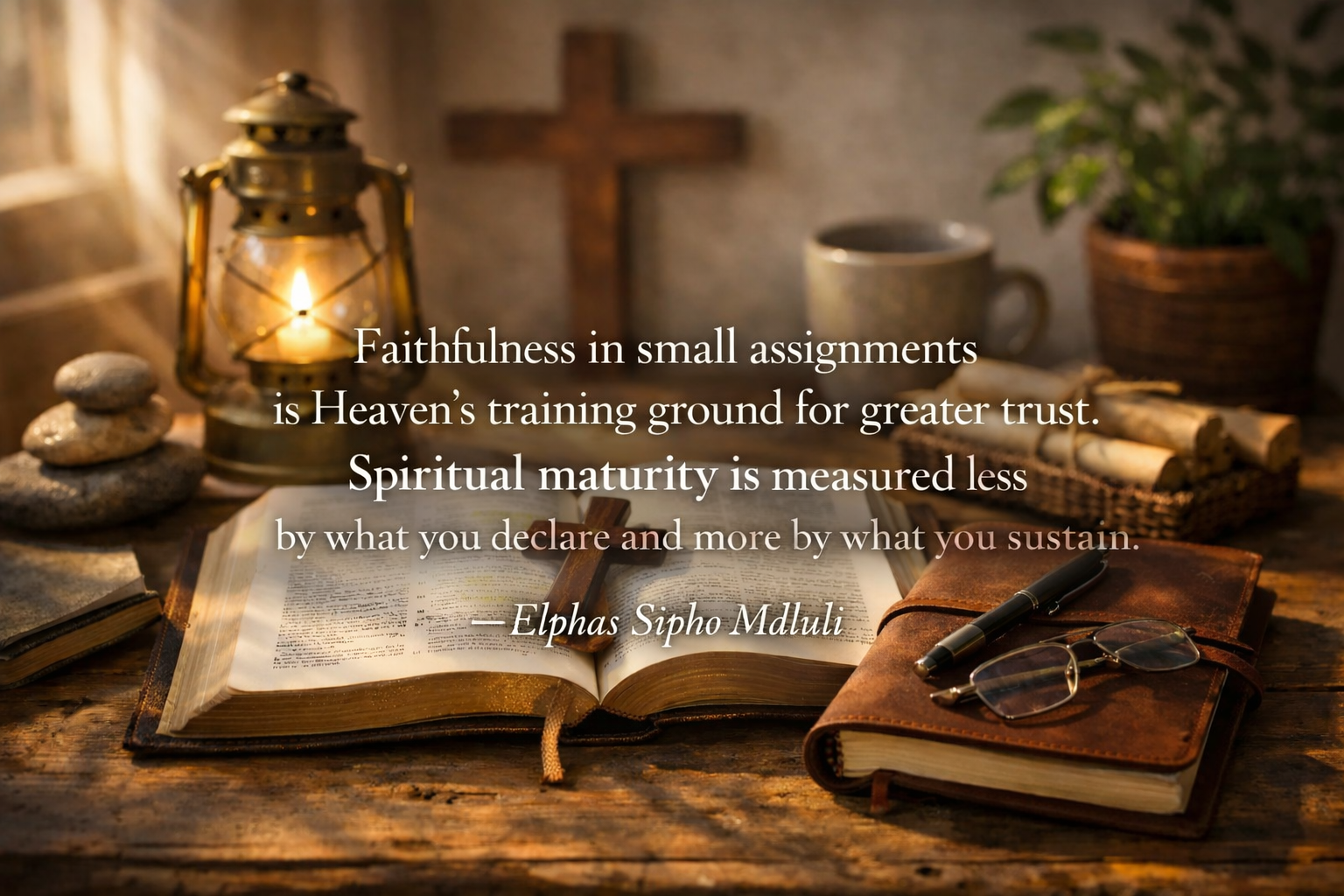
Jesus praises faithfulness, not exposure. Faithfulness is measurable in responsibility—showing up consistently, serving with integrity,
honoring leadership, and doing what is entrusted without drama.
Explanation: Visibility is not the problem; premature visibility is. When visibility arrives before responsibility, it produces shallow influence
and unstable character. But responsibility before visibility produces credibility, humility, and spiritual weight.
Leadership insight: Churches are often harmed by gifted people who are not formed. Gifts can draw attention while character lags behind.
Responsibility slows the believer down in the right way; it helps them learn order, submission, consistency, and reliability.
Practical implication: If you want clarity about calling, begin where responsibility is needed and where faithfulness can be tested.
Not to “prove yourself,” but to let stewardship become real.
Movement 2: Stewardship of Calling
Biblical grounding: 1 Peter 4:10 — “as good stewards…”
Calling is not merely a feeling; it is a stewardship. God entrusts grace to a believer and expects it to serve others.
Explanation: Many believers treat calling as a future title. Scripture treats calling as a present responsibility.
You do not discover calling only by thinking; you clarify calling by stewarding what you already carry—skills, compassion, discernment,
encouragement, administration, teaching capacity, mercy, helps, generosity, leadership, prayer, service.
Leadership insight: The church does not need more “interested” people; it needs formed stewards.
A steward asks, “What has God entrusted to me?” and “Where does this strengthen the body?”
Practical implication: Instead of searching for the perfect role, begin by identifying the grace you already carry and where it can bless people reliably.
Calling often becomes clearer when it is practiced.
Movement 3: Service as Spiritual Maturity
Biblical grounding: Ephesians 4:12–13 — ministry leads to maturity
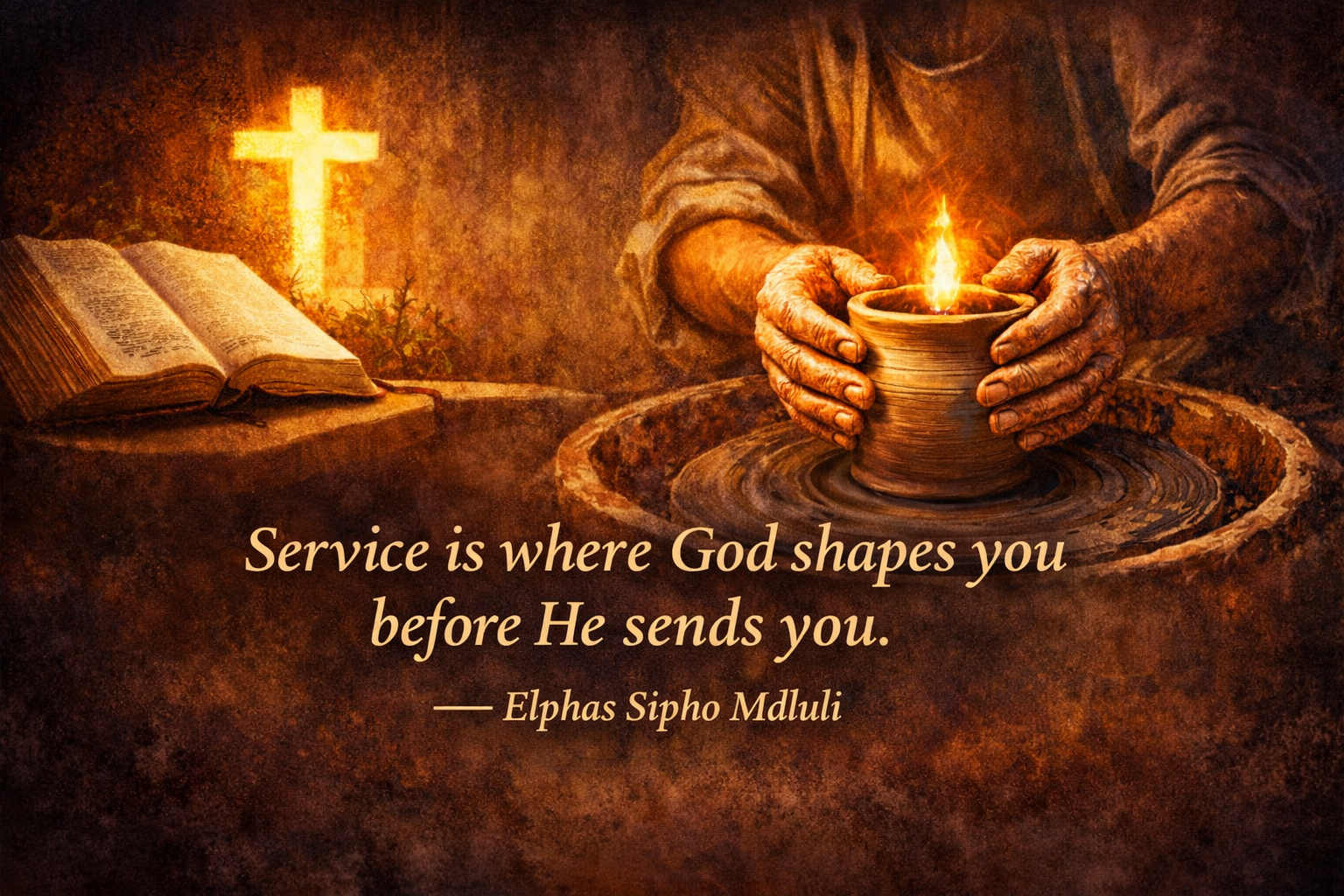
Service is not only output; it is formation. It matures the believer through obedience, consistency, humility, and submission to order.
Explanation: A believer can attend services for years and still remain spiritually fragile if they never move into responsibility.
Responsibility forces growth: it trains patience, strengthens discipline, exposes pride, and teaches collaboration.
It also develops spiritual muscles—faithfulness, endurance, and wisdom.
Leadership insight: Emotional intensity can be mistaken for maturity. But maturity is proven in consistency of obedience.
People who serve faithfully learn how to lead themselves before leading others.
Practical implication: If you desire spiritual depth, do not only consume teaching. Let teaching produce practice.
Service becomes the training ground where truth becomes character.
Movement 4: Influence Through Contribution
Biblical grounding: Mark 10:43–45 — greatness through serving
In Christ’s Kingdom, influence grows downward before it grows outward.
Explanation: Many want influence because they want impact. Yet Scripture teaches that impact is sustained by servanthood.
Contribution is influence in its purest form—building quietly, strengthening people steadily, and bearing responsibility without demanding credit.
Leadership insight: True influence is not measured by who notices you. It is measured by who becomes stronger because you were faithful.
Contribution produces credibility. Credibility produces trust. Trust expands responsibility.
Practical implication: Choose contribution over reputation. Let your consistency speak. Let your character carry your gift.
Movement 5: Faithfulness That Strengthens the Church
Biblical grounding: 1 Corinthians 12:25–26 — mutual care within the body
The church becomes healthy when members function faithfully, not when a few are overloaded.
Explanation: Faithful service stabilizes the church. It reduces gaps, strengthens structure, protects unity, and models discipleship.
It also creates a culture where responsibility is normal and maturity is expected.
Leadership insight: A strong church is not built by excitement; it is built by ordered faithfulness.
When believers embrace responsibility, leaders can equip rather than constantly rescue.
Practical implication: Ask, “What strengthens the body?” not “What expresses me most?”
The church is not a stage for self-fulfillment; it is a body for mutual edification.
5) Ordered Life Integration
Service thrives where life is ordered. When a life is rightly ordered, service becomes a natural expression rather than an obligation.
Disorder produces burnout, inconsistency, and resentment. Order produces stability, readiness, and longevity.
An ordered life includes:
- Spiritual alignment: serving from intimacy with Christ, not from striving.
- Disciplined structure: showing up consistently, honoring time, preparing well.
- Faithful stewardship: managing energy, relationships, and commitments with wisdom.
- Purposeful influence: serving in ways that strengthen the body, not inflate the ego.
This is why service is formation: it teaches believers to align their schedules, habits, and priorities under Christ.
It shapes people into steady disciples rather than occasional participants.
Responsibility Before Visibility: The Hidden Beginning of True Ministry
The hidden place is where motives are purified. It is where a believer learns to serve without applause, to obey without negotiation,
and to be consistent without being seen.
In the Kingdom, God often entrusts visible influence after He has formed invisible faithfulness. Not because visibility is evil,
but because visibility reveals what is inside. The hidden season builds what visibility cannot create:
- reliability
- humility
- endurance
- teachability
- spiritual order
If you want ministry that lasts, begin with responsibility that is quiet.
Three Directional Invitations (Formation Pathways)
1) Intellectual Formation — Freedom Hub:
Those desiring deeper clarity on purposeful living and stewardship may continue exploring structured teachings through Freedom Hub,
where biblical principles are developed with leadership-level depth and practical frameworks.
Explore stewardship and calling teachings on Freedom Hub
2) Embodied Formation — Church:
Mature ministry is lived, not imagined. As you
connect with our church community and explore ministry pathways,
allow your gifts to become stewardship in a real spiritual household. And as you
enter our structured discipleship pathway for consistent spiritual growth,
let formation shape your contribution into lasting strength.
3) Structured Growth — Patreon:
For believers pursuing intentional spiritual development and leadership maturity, Patreon can serve as a guided formation space—where disciplined teaching,
structured practices, and accountable growth support long-term consistency rather than short-term intensity.
Join a guided formation space for leadership maturity
6) Practical Formation Guidance
This section moves from insight to participation—without pressure, and without recruitment language. The goal is clarity, readiness, and steady obedience.
A) Reflection Questions (for discerning your next step)
- When I think about serving, do I desire contribution or recognition?
- What responsibilities have I avoided because they feel “small”?
- Where has God already given me grace to help people consistently?
- Do I have the structure to serve steadily (time, priorities, emotional maturity)?
- Am I teachable—willing to be guided, corrected, and formed?
- What would it look like for my service to strengthen the body, not just express me?
B) Ministry Readiness Indicators
These are not perfection tests; they are maturity markers. You are likely ready for increased responsibility when you show:
- Consistency: you can be relied upon without repeated reminders.
- Order: your life has enough structure to carry commitment.
- Humility: you can serve without controlling outcomes or demanding credit.
- Submission: you can honor leadership and follow direction without offense.
- Integrity: you handle people and resources with trustworthiness.
- Stability: you do not serve from emotional volatility or unresolved conflict.
If these are weak, the answer is not condemnation. It is formation.
C) Spiritual Posture for Serving
- Serve from intimacy, not insecurity. Ministry cannot become a substitute for identity in Christ.
- Serve with reverence. You are handling people, sacred moments, and spiritual responsibilities.
- Serve with patience. Formation is gradual. Faithfulness grows over time.
- Serve with honor. Honor leadership, fellow servants, and the people you serve.
- Serve with boundaries and wisdom. An ordered life protects longevity.
D) Leadership Applications
If you are growing into leadership, service provides the training ground for leadership realities:
- You learn how to communicate with humility.
- You learn how to handle correction without collapsing.
- You learn how to prioritize excellence without perfectionism.
- You learn how to serve people without being controlled by their opinions.
- You learn how to build with others rather than compete.
Leadership in the Kingdom is not a position you claim. It is a weight you are formed to carry.
E) Next-Step Clarity (without pressure)
-
Strengthen your foundations. A believer who serves without foundations may function but remain unstable; build your grounding through
our Start Foundations pathway for stable discipleship.
-
Align your doctrine. Service becomes dangerous when beliefs are confused; clarify your doctrinal grounding through
our beliefs and doctrine page for biblical alignment.
-
Seek pastoral guidance. Discernment is strengthened through wise counsel; if you need clarity, reach out through
pastoral contact and spiritual guidance support.
-
Enter structured community and pathways. Ministry is not an individual project; it is body life. As you
connect with our church community and explore ministry pathways,
treat service as formation—step by step, with order and faithfulness.
Leadership Closing
Service is not a spiritual side activity; it is one of God’s primary instruments for forming maturity, proving stewardship, and strengthening the church
through ordered contribution. Responsibility teaches what visibility cannot. Faithfulness reveals what ambition often hides.
And consistent service shapes believers into stable disciples whose influence can be trusted.
Calling rarely becomes clear in isolation—it is often revealed through faithful service.
Serve & Build
Ready to Serve With Purpose?
Spiritual maturity expresses itself through faithful service. Discover where you can contribute, grow in responsibility, and build others.