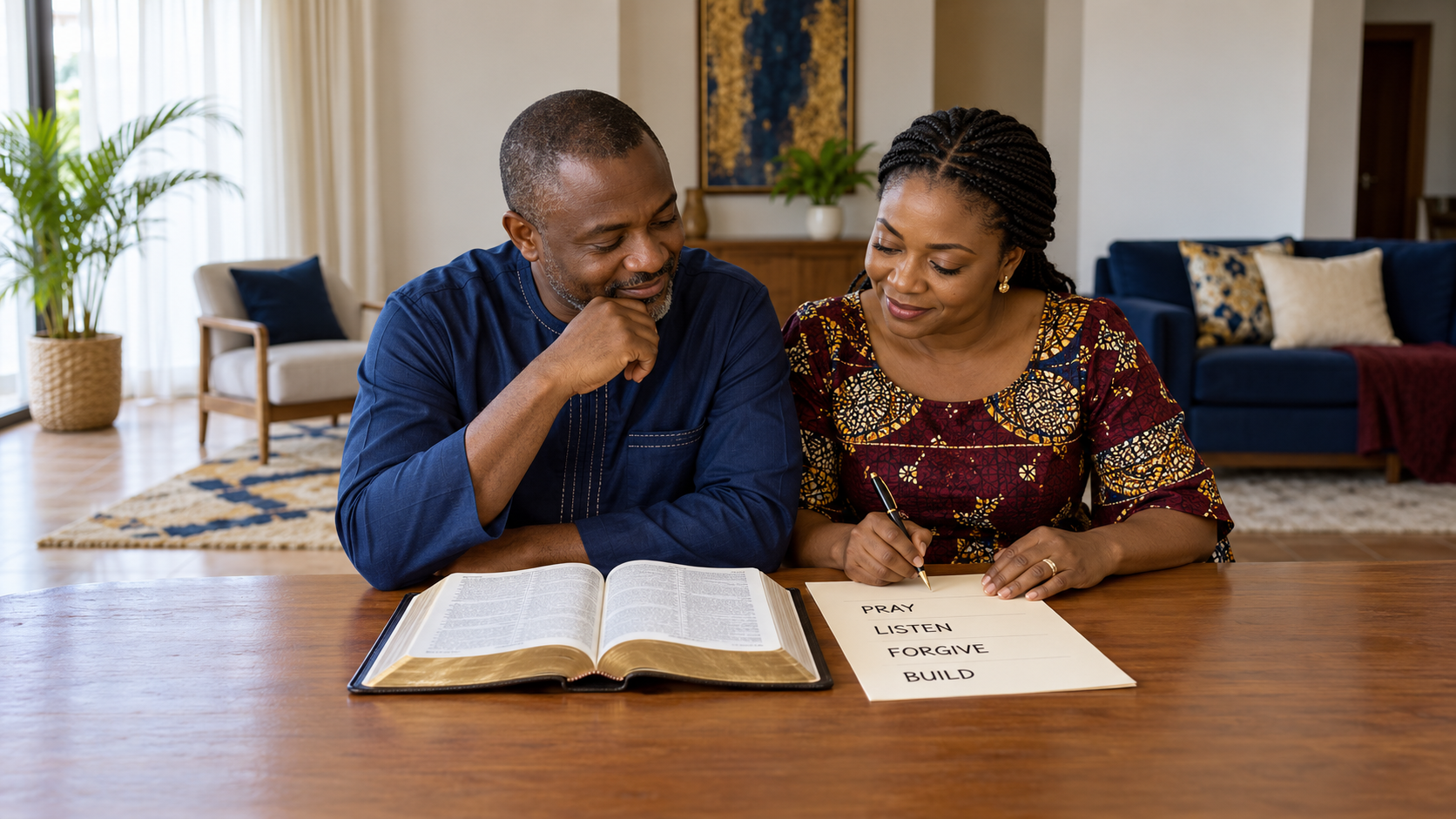
Christian Marriage • Discipleship • Family Life
How to Build Spiritual Unity in Marriage Through Shared Faith Practices
Build a shared spiritual direction through prayer, Scripture, forgiveness, wise decisions and faithful Christian community.
Spiritual unity in marriage grows as a couple seeks God together and practises shared prayer, Scripture, forgiveness, wise stewardship and faithful obedience.
Spiritual unity in marriage grows when a husband and wife learn to seek God together and allow their faith to shape ordinary decisions. It does not mean that two people have identical personalities, prayer styles or levels of spiritual maturity. It means they are choosing a shared direction under Christ, with Scripture, prayer, forgiveness and faithful obedience becoming part of the life they build together.
Many Christian couples sincerely love God but practise faith mostly as individuals. One spouse prays alone. Each person reads Scripture separately. Difficult decisions are discussed without prayer, and spiritual concerns are mentioned only during a crisis. Personal devotion remains valuable, but marriage also needs shared practices that strengthen trust and help the couple recognise that they belong to God together.
Shared faith practices should not become a measure of superiority or a method of controlling a spouse. They are simple rhythms through which a couple makes room for God, listens to one another and responds faithfully. The goal is not performance. The goal is a marriage increasingly shaped by the character and teaching of Christ.
What Spiritual Unity in Marriage Means
Spiritual unity in marriage is a shared commitment to honour Christ in the relationship. It includes agreement about the direction of the home, willingness to pray and learn together, and mutual responsibility for living out biblical values.
Unity is not uniformity. One spouse may speak freely in prayer while the other is quieter. One may understand Scripture quickly while the other needs more time and discussion. A healthy marriage does not force both people into one personality. It helps them move in one spiritual direction while respecting how each person grows.
Ecclesiastes 4:9–10 teaches that two are better than one because each can help the other when one falls. In marriage, that partnership includes spiritual encouragement. A spouse can remind the other of God’s faithfulness, offer prayer during pressure and help turn biblical conviction into practical action.
Begin Spiritual Unity in Marriage With Honest Conversation
Couples cannot build spiritual unity through assumptions. Begin with a calm conversation about the present condition of your shared faith life. Ask what helps each person feel spiritually supported. Discuss what has become difficult and what kind of practice would be realistic in the current season.
Avoid using the conversation to accuse. Statements such as “You never pray with me” usually create defensiveness. A more constructive approach is: “I would like us to make more room for prayer together. What would feel natural and sustainable for both of us?”
Honesty may reveal different expectations. One spouse may imagine a long daily devotion while the other can manage ten focused minutes several times a week. The couple can begin with a small practice they can keep, then review it later.
Pray Together in a Simple and Sustainable Way
Shared prayer is one of the clearest practices for spiritual unity in marriage. Prayer allows couples to bring gratitude, needs, decisions and concerns before God together. It also helps each spouse hear what matters deeply to the other.
Begin simply. Pray for a few minutes before sleep, after breakfast or before an important decision. Each person can mention one point of gratitude and one request. A short sincere prayer practised consistently can be more helpful than an ambitious routine that quickly disappears.
Do not use prayer to correct your spouse indirectly. Prayer should not become a sermon in which one person tells God everything the other person is doing wrong. If a concern needs discussion, speak about it honestly and respectfully outside the prayer.
Read and Apply Scripture as a Couple
A shared Bible practice gives a couple common language for decisions and growth. This does not require completing a large reading programme. Choose a short passage, read it carefully and discuss one question: What should this truth change in the way we live?
James 1:22 warns believers to be doers of the word and not hearers only. Therefore, shared reading should lead toward application. A passage about patience may affect how the couple handles disagreement. Teaching about stewardship may lead to a budget conversation. A command to forgive may reveal where repair is needed.
When interpretations differ, remain teachable. Read the context, consult responsible biblical teaching and avoid turning every disagreement into a test of loyalty. Scripture should bring the marriage under God’s authority, not provide ammunition for one spouse to dominate the other.
Strengthen Spiritual Unity Through Forgiveness
Unresolved hurt weakens spiritual unity in marriage because a couple cannot easily pray, listen and serve together while resentment is being protected. Forgiveness does not deny harm or remove the need for accountability. It refuses to make revenge, contempt or permanent condemnation the governing response.
Ephesians 4:32 calls believers to be kind, tenderhearted and forgiving. In marriage, this includes naming wrong clearly, apologising without blame-shifting and making change visible. Reconciliation may require more than one conversation, especially where trust has been damaged.
Serious harm, abuse, coercion or danger should not be hidden under language about submission or forgiveness. Appropriate pastoral, safeguarding, legal or professional support may be necessary. General biblical encouragement does not replace specialised help.
Make Decisions With Shared Faith and Practical Wisdom
Spiritual unity becomes visible when faith shapes decisions about money, family, work, church involvement and the use of time. Before a major decision, agree on the facts, pray for wisdom, consider biblical principles and discuss the likely consequences.
James 1:5 encourages believers who lack wisdom to ask God. Asking should work alongside responsible enquiry. A couple considering a financial commitment should pray and examine the numbers. A family decision may require counsel and careful planning. Faithful stewardship does not require ignoring evidence.
If agreement does not come immediately, avoid forcing a quick answer merely to end discomfort. Identify what information is missing, what can wait and when the discussion will resume. Patient discernment can protect both the relationship and the decision.
Worship and Serve Together Without Performing
Corporate worship and Christian fellowship can strengthen spiritual unity in marriage. Attend church together where possible, participate in discipleship and build relationships with mature believers. Community helps a couple receive teaching, encouragement and accountability beyond their own perspective.
Serving together can also unite a couple around a purpose larger than personal comfort. Service may include hospitality, practical care, ministry support or helping someone in need. The activity should fit the couple’s season and capacity.
Do not compare your marriage with couples who appear more visible in ministry. Public activity does not automatically prove private health. Choose forms of worship and service that are sincere, responsible and consistent with the care your marriage and family require.
Respect Different Seasons of Spiritual Growth
At times, one spouse may feel spiritually strong while the other is tired, discouraged or uncertain. Spiritual unity in marriage does not require pretending that both people are always in the same place. It requires patience and a refusal to shame the person who is struggling.
Encourage without controlling. Offer prayer, listen carefully and invite participation without turning every quiet season into a crisis. At the same time, do not ignore persistent withdrawal, destructive behaviour or rejection of responsibilities that materially harms the marriage.
A mature couple learns when to wait, when to speak, when to seek counsel and when to establish necessary boundaries. Love combines grace with truth.
A Weekly Shared Faith Rhythm
A simple weekly rhythm can help couples practise spiritual unity in marriage without creating an unrealistic programme.
- Choose one short Scripture passage to read and discuss.
- Share one reason for gratitude and one concern requiring prayer.
- Review one practical area such as money, family responsibilities or time.
- Ask whether any apology, forgiveness or clarification is needed.
- Agree on one faithful action and one time to follow up.
The rhythm can take fifteen to thirty minutes. Keep it relational rather than mechanical. Some weeks will need deeper conversation. Other weeks may involve only prayer and one practical decision. Consistency matters more than creating an impressive routine.
When You Are Starting From Different Places
Some couples begin marriage with different levels of biblical knowledge or church involvement. Others experience change later. One spouse may grow more interested in faith while the other becomes hesitant. Pressure rarely produces genuine spiritual maturity.
Begin with respect, prayer and honest conversation. Invite rather than manipulate. Live your faith with humility. Where appropriate, seek pastoral guidance that honours both truth and the dignity of each person.
If the difference affects major commitments, child-rearing, financial stewardship or the safety of the relationship, do not pretend that the issue is small. Address it carefully before resentment becomes established.
Build Spiritual Unity in Marriage One Practice at a Time
Spiritual unity in marriage usually grows through ordinary practices repeated with sincerity. Pray together. Read and apply Scripture. Repair hurt. Make decisions under God’s wisdom. Worship, serve and remain connected to faithful Christian community.
Begin with one practice that fits your present season. Keep it simple enough to sustain and meaningful enough to shape the relationship. Review what is helping, and adjust without turning the practice into another source of conflict.
A spiritually united marriage is not a marriage without differences or difficulties. It is a marriage in which two people keep bringing their shared life under Christ and learning to walk faithfully together.
Optional Supporting Christian Marriage Resource
Building a Sacred Union: Biblical Guidance for Unbreakable Marriage Bonds by Elphas Sipho Mdluli is a catalogue-verified resource for couples seeking biblical guidance on unity, resilience and purpose in marriage.
It is offered as optional further reading and does not replace Scripture, pastoral care, safeguarding or appropriate professional support.
Continue Through FCIC Family Life and Discipleship
Choose One Shared Faith Practice
Set aside a short time this week to pray, read one passage and agree on one faithful action. Begin simply and return consistently.