Tag: Jesus Christ

  • Living as a Covenant-Conscious Christian

    Living as a Covenant-Conscious Christian

    Freedom Centre International Church • Christian Living

    Living as a Covenant-Conscious Christian

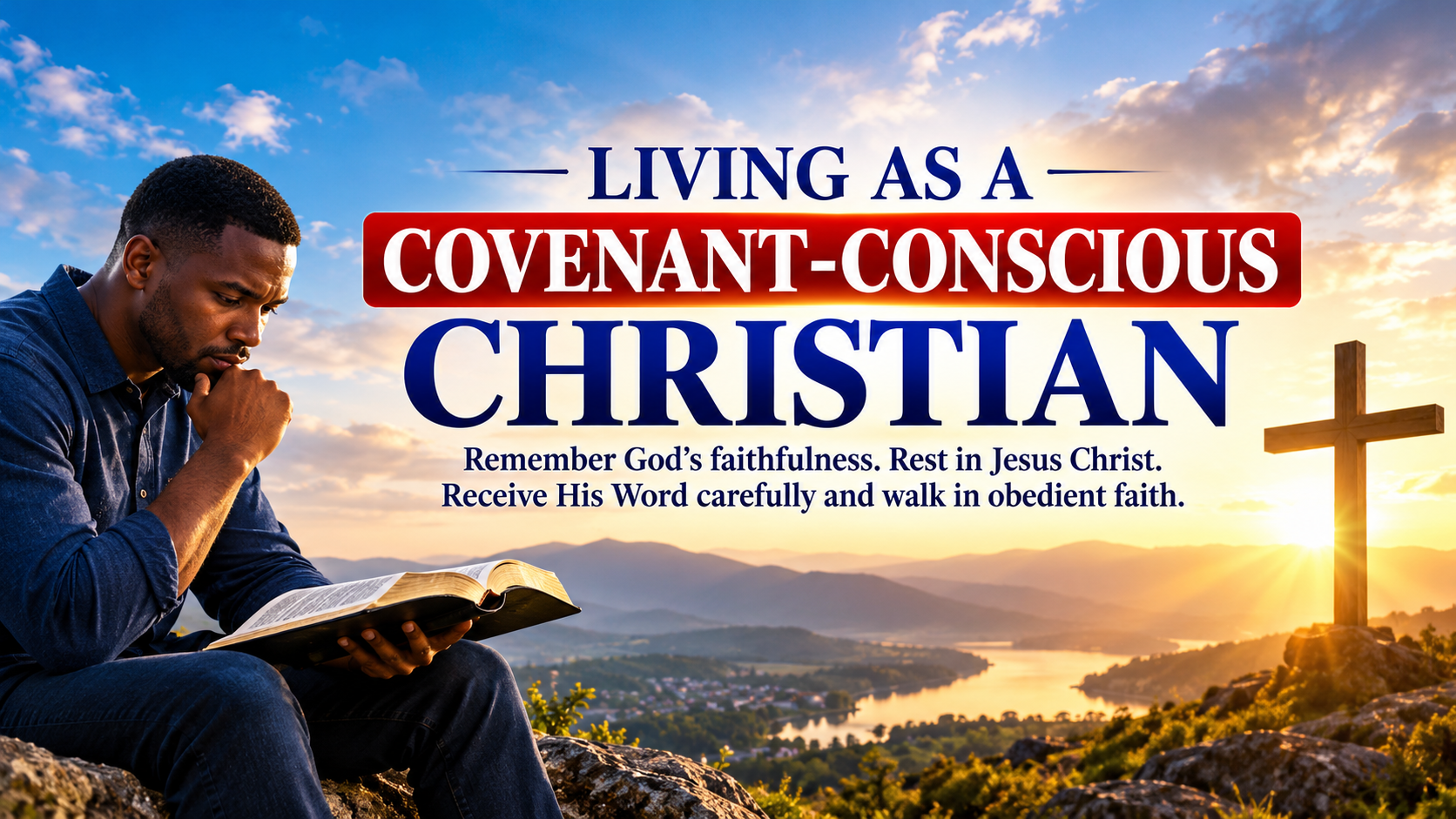
    Remember God’s faithfulness. Rest in Jesus Christ. Receive His Word carefully and walk in obedient faith.

    Christian Living God’s Faithfulness Biblical Promises Discipleship
    Written by Rev Elphas Sipho Mdluli

    A covenant-conscious Christian trusts God’s faithfulness, rests in Jesus Christ and responds to God’s Word with obedient faith. This way of life begins with who God is rather than with changing circumstances.

    Why Covenant-Conscious Christian Living Matters

    Throughout Scripture, God reveals Himself as faithful. He keeps His Word and fulfils His saving purposes. Therefore, covenant truth gives believers a firm foundation for faith.

    Yet covenant truth should never produce spiritual entitlement. Instead, it should lead us towards trust, gratitude and obedience.

    Above all, Jesus Christ remains at the centre. Through Him, we understand God’s saving work and find our confidence in God’s faithfulness.

    1. Trust God’s Faithfulness

    Covenant-conscious living begins with God’s character. Scripture repeatedly presents Him as faithful.

    “Therefore know that the LORD your God, He is God, the faithful God who keeps covenant and mercy…”

    Deuteronomy 7:9 (NKJV, excerpt)

    Build Your Confidence on God’s Character

    Our confidence does not begin with the strength of our feelings. Instead, it begins with the trustworthiness of God.

    Circumstances change, and seasons can become difficult. Nevertheless, God’s character remains dependable.

    Faith becomes steadier when our confidence rests in God’s character rather than in changing circumstances.

    2. Keep Jesus Christ at the Centre

    Jesus Christ must remain at the centre of Christian covenant understanding.

    “This cup is the new covenant in My blood, which is shed for you.”

    Luke 22:20 (NKJV)

    Understand Covenant Through Christ

    Christians do not approach God by trying to recreate Israel’s covenant arrangements. Instead, we come to God through Jesus Christ.

    His death and resurrection are central to our reconciliation with God. Moreover, His grace shapes the way we live after receiving salvation.

    Therefore, covenant teaching should lead us back to Christ. It should do more than give us religious terminology.

    Jesus is not an addition to covenant truth. He is central to God’s saving work.

    3. Trust God’s Promises Wisely

    God’s promises are precious. However, they should not become formulas for controlling outcomes.

    Read Every Promise in Context

    Biblical faith asks what God has actually said. It also considers the context in which He said it.

    Then faith trusts God’s wisdom concerning fulfilment. As a result, we can pray boldly without becoming presumptuous.

    Biblical safeguard: Do not remove a promise from its biblical context. Likewise, do not turn it into a guarantee that God must produce your preferred outcome on your timetable.
    Ask yourself Am I trusting what God has actually said, or am I asking Him to confirm an outcome I have already chosen?

    4. Let Grace Produce Obedience

    Grace does not make obedience irrelevant. Instead, grace changes its foundation.

    We do not obey God to purchase His love. We obey because we belong to Him.

    “If you love Me, keep My commandments.”

    John 14:15 (NKJV)

    Let Grace Shape Daily Choices

    Faith should influence our words, relationships, work and private decisions. Therefore, obedience becomes a grateful response to God’s grace.

    Christians do not live perfectly. When we fail, however, we return to Christ. We receive His correction and continue growing.

    5. Remember God’s Faithfulness in Difficult Seasons

    Present pressure can make past mercy easy to forget. Therefore, Scripture repeatedly calls God’s people to remember.

    Remember What God Has Already Revealed

    When answers seem delayed, remember what God has already revealed about Himself. Recall His saving grace in Christ. Also remember previous mercies.

    Then return to Scripture and pray honestly. Meanwhile, continue doing what is right as you wait.

    Do Not Let Pressure Rewrite God’s Character

    A difficult season is real. Nevertheless, it is not the whole story of God’s relationship with you.

    Remembering God’s faithfulness does not deny difficulty. Instead, it prevents difficulty from becoming the only evidence through which we interpret God.

    6. Let God’s Faithfulness Shape Your Relationships

    Covenant consciousness should not make believers proud. Instead, it should make us grateful, faithful and merciful.

    We have received grace. Therefore, we should extend grace to others.

    Become Faithful in Your Commitments

    Keep your word where you can. Speak truthfully and treat people with dignity.

    Ask forgiveness when you are wrong. Likewise, forgive others as Christ teaches.

    In this way, covenant truth moves from theological language into everyday Christian character.

    7. Practise Covenant-Conscious Living Each Day

    Covenant truth becomes practical when it shapes ordinary routines.

    Read God’s Word Carefully

    Read Scripture to know God more accurately. Pay attention to context rather than collecting isolated promises.

    Pray With Dependence

    Bring your needs to God. At the same time, submit your plans and expectations to His wisdom.

    Obey What Is Already Clear

    Do not allow your search for future guidance to distract you from truth God has already made clear.

    Remember and Give Thanks

    Remember God’s grace and give thanks for His mercy. Then review whether your choices increasingly reflect Jesus Christ.

    A Simple Covenant-Conscious Christian Rhythm

    Use this simple pattern to connect covenant truth with Christ-centred daily discipleship.

    1
    REMEMBER Recall God’s character and faithfulness.
    2
    READ Understand God’s Word in context.
    3
    REST Trust the finished work of Jesus Christ.
    4
    RESPOND Obey God with gratitude and humility.
    5
    REFLECT Review whether your life reflects Christ.
    REMEMBER → READ → REST → RESPOND → REFLECT

    8. Remain Faithful While You Wait

    Waiting can test faith. However, delay does not mean that God has become unfaithful.

    Likewise, waiting does not give us permission to invent promises God has not made.

    Continue Doing What God Has Made Clear

    Continue praying and learning. Continue obeying what God has already made clear.

    Seek wise counsel where necessary. Most importantly, trust God’s character even when you cannot explain His timing.

    Key insight: Covenant faith is not confidence that God must follow our timetable. Instead, it is confidence that God remains faithful while we continue to follow Him.
    Featured Christian Resource

    Explore God’s Covenant Faithfulness More Deeply

    Continue exploring God’s covenants in Scripture and how they reveal His faithfulness and saving purposes.

    Everlasting Promises: Understanding Godly Covenants and How They Shape Your Life Today

    Author: Elphas Sipho Mdluli

    View the Book on Amazon

    Continue Growing in Christ

    Freedom Centre International Church exists to proclaim Jesus Christ, teach God’s Word and help believers grow in faithful Christian discipleship.

    Explore more biblical teaching, devotionals and ministry resources through the FCIC website.

    Visit Freedom Centre International Church

    Final Reflection

    A covenant-conscious Christian does not need to live in fear, spiritual entitlement or constant uncertainty.

    Remember God’s faithfulness. Rest in Jesus Christ. Receive His Word seriously. Then respond with obedient faith.

    Let God’s promises lead you closer to the Promise-Keeper. Let His grace deepen your worship.

    Above all, let your confidence in Christ produce faithfulness, humility, hope and love.

    Remember His faithfulness. Rest in Christ. Walk faithfully.

    Personal Prayer

    Father, thank You for Your faithfulness and for the new covenant established through Jesus Christ. Help me understand Your Word correctly. Teach me to trust Your promises without presumption and to obey You with a grateful heart. When I do not understand the timing, keep my confidence anchored in Your character. Let my life reflect the grace, faithfulness and love I have received in Christ. Amen.
    Freedom Centre International Church
    Christ-Centred Biblical Teaching for Faithful Christian Living
    Scripture • Prayer • Discipleship • Christian Living
  • How to Speak God’s Word Without Turning Faith Into a Formula

    How to Speak God’s Word Without Turning Faith Into a Formula

    Freedom Centre International Church

    How to Speak God’s Word Without Turning Faith Into a Formula

    Learn how biblical truth can shape your speech, prayers, decisions and daily responses without reducing Christian faith to a verbal formula.

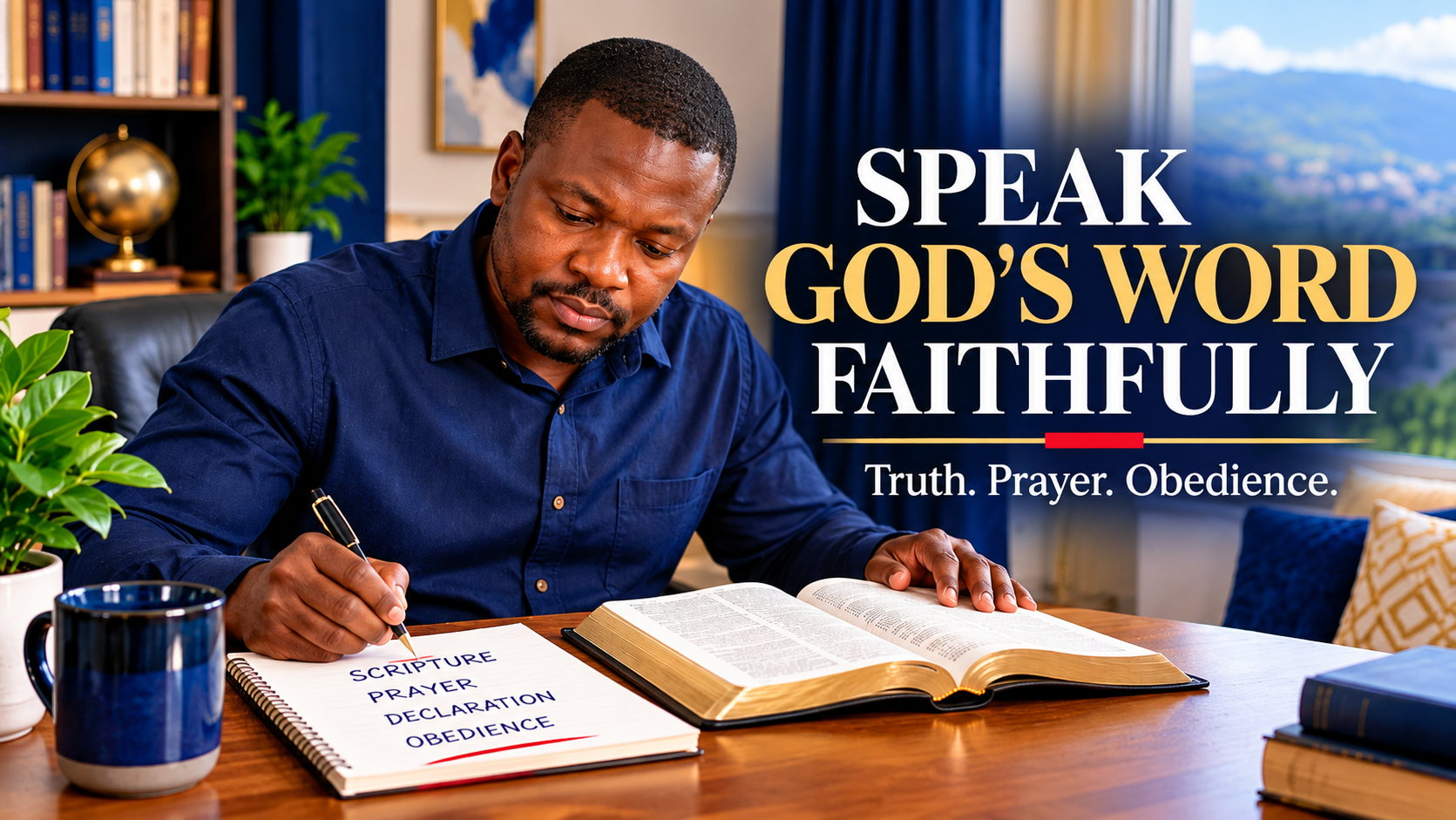
    Scripture Prayer Biblical Declarations Obedience
    Written by Rev Elphas Sipho Mdluli

    Speak God’s Word faithfully by allowing Scripture to shape what you believe, pray, declare and do. Biblical faith is not a formula for controlling circumstances. It is a Christ-centred response to God’s truth that brings together Scripture, prayer, trust, surrender and practical obedience.

    Our words matter, but Christian faith involves far more than positive speech. What we say must remain rooted in biblical truth, centred on Jesus Christ and connected to obedient living.

    There is an important difference between biblical faith and treating words as a spiritual formula. Scripture does not teach us to use words as a mechanism for forcing God to produce whatever outcome we desire.

    Biblical declarations are not magic words that force God to give us whatever we want. Neither are they a method of pretending that pain, sickness, financial difficulty, disappointment or other challenges do not exist.

    Rather, speaking God’s Word means bringing our thinking, speech, prayers and responses under the authority of Scripture.

    “Sanctify them by Your truth. Your word is truth.”

    John 17:17 (NKJV)
    1

    Speak God’s Word Faithfully by Starting With Scripture

    If we want to speak God’s Word faithfully, Scripture must come before our declarations.

    It can be tempting to begin with what we want and then search for a Bible verse that appears to support it. A healthier approach is to begin with Scripture itself.

    Ask first: What does this passage actually teach?

    Read the surrounding verses. Consider who was speaking, who was being addressed and what the passage means within the wider teaching of Scripture.

    “Be diligent to present yourself approved to God, a worker who does not need to be ashamed, rightly dividing the word of truth.”

    2 Timothy 2:15 (NKJV)

    Before turning a verse into a declaration, seek to understand it correctly. This protects us from using Scripture merely to confirm our own desires.

    2

    Keep Jesus Christ at the Centre

    Biblical faith is ultimately not faith in our ability to speak correctly. It is faith in God.

    The power of Christianity does not come from discovering the perfect combination of words. Our confidence rests in Jesus Christ—His finished work, His character, His promises and His lordship.

    “For all the promises of God in Him are Yes, and in Him Amen, to the glory of God through us.”

    2 Corinthians 1:20 (NKJV)

    Christ should therefore remain at the centre of what we believe and confess. Our words should direct our hearts towards Him rather than merely towards the outcomes we desire.

    3

    Faith Does Not Require You to Deny Reality

    Faith does not require us to pretend. A Christian facing difficulty can acknowledge the reality of the situation while still trusting God.

    David repeatedly demonstrated this in the Psalms. He spoke openly about fear, opposition, discouragement and danger. Yet he continually returned his attention to the character and faithfulness of God.

    “This situation is difficult, but God is with me.”

    You may also acknowledge: “I do not yet know how this problem will be resolved, but I will seek God for wisdom and continue doing what is right.”

    Speaking biblical truth allows God’s truth to become greater than fear without requiring us to deny reality.

    4

    Turn Scripture Into Prayer

    One of the safest ways to develop biblical declarations is to begin with prayer.

    Suppose you are struggling with anxiety. Instead of immediately making exaggerated statements about what will happen, begin with Philippians 4:6–7 and bring the matter before God.

    Father, help me bring my concerns to You in prayer. Guard my heart and mind through Christ Jesus.

    From that prayer, a responsible declaration can emerge:

    I will bring my anxieties to God in prayer and trust Him to guard my heart and mind.

    The declaration remains close to Scripture. It does not attempt to control God. It expresses faith while maintaining humility.

    5

    Connect Your Words With Obedience

    Biblical declarations should influence behaviour. What we confess from Scripture should increasingly become visible in how we live.

    “But be doers of the word, and not hearers only, deceiving yourselves.”

    James 1:22 (NKJV)

    If you declare that God calls you to forgive, begin taking steps towards forgiveness.

    If you declare that God has called you to stewardship, manage what He has entrusted to you responsibly.

    If you declare that God gives wisdom, seek wisdom before making important decisions.

    The strongest declaration is often the one that becomes visible through obedient living.
    6

    Avoid Turning Faith Into a Formula

    There is a danger in believing that if we repeat certain words enough times, God must produce the outcome we want.

    That is not biblical faith. God remains sovereign. Prayer is relational, not mechanical.

    “Nevertheless not My will, but Yours, be done.”

    Luke 22:42 (NKJV)

    This is not weak faith. It is surrendered faith.

    We can pray boldly. We can believe God’s promises. We can speak Scripture confidently. Yet our confidence must always remain under God’s authority.

    7

    Let God’s Word Renew Your Thinking

    Speaking Scripture is especially valuable when it becomes part of the renewal of the mind.

    “And do not be conformed to this world, but be transformed by the renewing of your mind…”

    Romans 12:2 (NKJV)

    Instead of allowing fear, disappointment or past experiences to become the final authority, we allow God’s truth to reshape our thinking.

    This is where biblical declarations can become a valuable spiritual discipline. They help us deliberately return our minds to truth.

    8

    Make Your Declarations Christ-Centred and Responsible

    A healthy biblical declaration should be something you can genuinely say before God with humility.

    Biblical Declarations for Faithful Christian Living

    God is with me, so I will not allow fear to control my decisions.
    Through Christ, I will pursue forgiveness rather than bitterness.
    I will ask God for wisdom and act responsibly with what He places in my hands.
    My circumstances do not determine God’s character.
    I will continue praying, obeying and trusting God even while I wait.

    These declarations do not attempt to manipulate circumstances. They position the believer to respond to circumstances through faith.

    A Simple Pattern to Speak God’s Word Faithfully

    Use this five-step framework to keep biblical declarations rooted in Scripture, prayer and practical discipleship.

    SCRIPTURE What does God’s Word actually say?
    TRUTH What biblical truth should shape my thinking?
    PRAYER How should I bring this matter before God?
    DECLARATION What can I faithfully say in agreement with Scripture?
    OBEDIENCE What faithful action should now follow?

    Speak Life While Remaining Rooted in Truth

    There is great value in learning to discipline our speech. We do not need to allow fear, bitterness, hopelessness or uncontrolled emotion to determine everything we say.

    Speak God’s promises. Declare biblical truth. Pray confidently. Reject destructive thinking. Encourage yourself in the Lord.

    But also remain humble, obedient and surrendered to God’s will.

    When we speak God’s Word faithfully, our goal is not simply to say better words. We allow biblical truth to shape our thinking, speech, decisions and actions so that our lives increasingly reflect Jesus Christ.

    The goal is not simply to say better words. The goal is to become a person whose thinking, speech and actions increasingly reflect Jesus Christ.

    Continue Growing Through Biblical Teaching

    Freedom Centre International Church exists to help people encounter biblical truth, grow in Christ and live out their faith practically. Continue exploring our church resources and ministry.

    Recommended Christian Resource

    Continue Applying God’s Word

    For readers who would like a structured resource for developing Scripture-centred declarations and intentional spiritual growth.

    Speak Life: 90 Powerful Biblical Declarations for Wholeness and Breakthrough

    Author: Elphas Sipho Mdluli

    A Christian resource designed to help readers engage biblical truth through Scripture-centred declarations and intentional spiritual growth.

    View the Book on Amazon

    Closing Prayer

    Father, thank You for giving us Your Word as truth. Teach us to understand Scripture correctly and to allow it to renew our minds. Guard us from using Your Word carelessly or turning faith into a formula. Help us speak with faith, humility and wisdom. May our prayers, declarations, decisions and actions honour Jesus Christ. Give us grace not only to hear Your Word but also to obey it. In Jesus’ name, Amen.

    Freedom Centre International Church
    “Set Free by the Word”
    Biblical Truth • Christ-Centred Living • Practical Discipleship