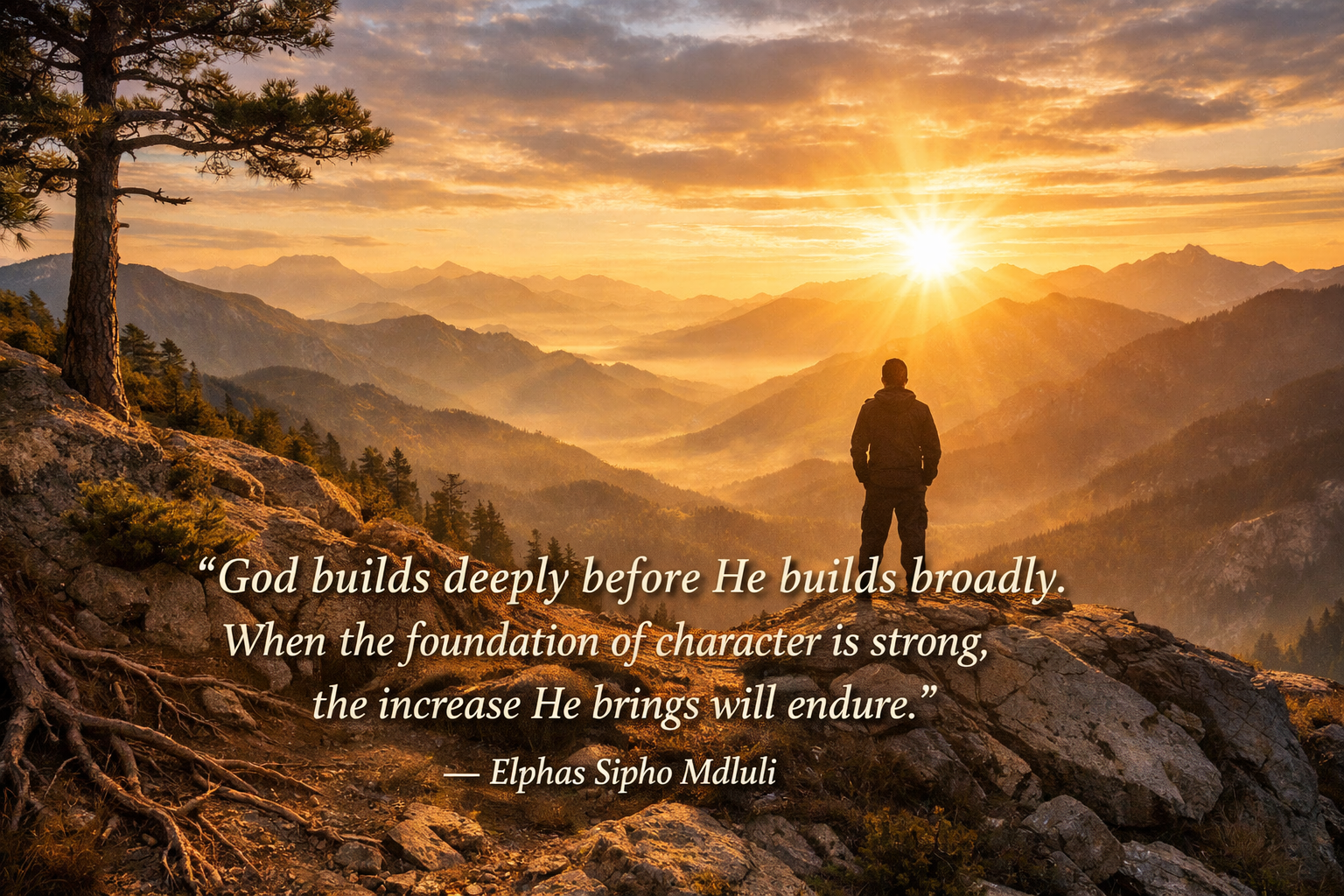
Tag: spiritual formation

  • Foundations Before Increase — Quotes and Declarations for Intentional Spiritual Growth

    Foundations Before Increase — Quotes and Declarations for Intentional Spiritual Growth

    Quotes & Declarations

    Foundations Before Increase — Quotes and Declarations for Intentional Spiritual Growth

    God often does His deepest work before visible expansion appears. These quotes and declarations highlight the wisdom of spiritual formation, faithful obedience, and strong foundations before increase.

    Introduction

    Visible increase is not the first sign of God’s work. Very often, His deepest work begins where others cannot see it. Before He broadens influence, He strengthens character. Before He enlarges responsibility, He deepens obedience. These reflections are meant to help readers meditate on God’s wisdom in building strong spiritual foundations before visible expansion.

    For deeper teaching, read the full biblical teaching on foundations before increase and continue with the devotional on growing deep before growing wide .

    Quotes by Elphas Sipho Mdluli

    “God does not rush increase when character is still under construction.”

    — Elphas Sipho Mdluli

    “Hidden obedience is often the workshop where God prepares visible influence.”

    — Elphas Sipho Mdluli

    “Before God trusts a believer with greater weight, He strengthens the inner structure that must carry it.”

    — Elphas Sipho Mdluli

    “Spiritual maturity is not proven by how quickly you rise, but by how deeply you are rooted in Christ.”

    — Elphas Sipho Mdluli

    “God builds deeply before He builds broadly, because what lacks foundation cannot sustain increase.”

    — Elphas Sipho Mdluli

    “Faithfulness in small things is not a minor lesson; it is training for greater stewardship.”

    — Elphas Sipho Mdluli

    “The Lord is not only preparing your assignment; He is preparing you for the assignment.”

    — Elphas Sipho Mdluli

    “Influence without formation becomes fragile, but influence built on character becomes fruitful and enduring.”

    — Elphas Sipho Mdluli

    “God’s delays are often seasons of mercy, where He protects us from carrying what we are not yet ready to steward.”

    — Elphas Sipho Mdluli

    “You do not drift into maturity. You grow into it through truth, obedience, and intentional discipleship.”

    — Elphas Sipho Mdluli

    “Depth is never wasted in the Kingdom of God. What God builds deeply, He sustains greatly.”

    — Elphas Sipho Mdluli

    “Spiritual growth becomes stable when identity is rooted in Christ rather than in recognition, titles, or visibility.”

    — Elphas Sipho Mdluli

    Declarations for the Reader

    1. I embrace God’s process of building strong spiritual foundations in my life.
    2. I will not despise hidden seasons, because God is forming strength within me.
    3. I am becoming faithful in small things, and God is shaping me for greater responsibility.
    4. My identity is rooted in Christ, not in visibility, applause, or comparison.
    5. God is aligning my motives, habits, and direction with His will.
    6. I choose obedience, discipline, and consistency as part of my spiritual growth.
    7. I grow in Christ through discipleship, community, and biblical truth.
    8. My character is being strengthened so that I can carry increase with humility and faithfulness.
    9. I welcome God’s formative work in the hidden places of my life.
    10. What God is building in me will be stable, fruitful, and enduring.

    Closing Reflection

    God’s way is wise, steady, and intentional. He does not merely give increase; He prepares believers to steward it well. When you allow Him to deepen your foundations, you position your life for enduring fruitfulness rather than shallow movement.

    Read the full article on foundations before increase for fuller biblical teaching, and continue with the devotional on growing deep before growing wide for prayerful reflection and spiritual encouragement.

  • Obedience Is a Kingdom Accelerator: Quotes & Declarations for Ordered Growth

    Obedience Is a Kingdom Accelerator: Quotes & Declarations for Ordered Growth

    Church • Quotes & Declarations

    Obedience Is a Kingdom Accelerator: Quotes & Declarations

    A formation-focused collection of quotes and declarations drawn from the teaching on obedience, alignment, and steady spiritual advancement in Christ— designed for disciplined believers who desire mature growth within the life of the Church.

    Theme: Advancing Through Obedience Focus: Order & Alignment Use: Prayer • Confession • Formation
    Main Quote (Hero Image):
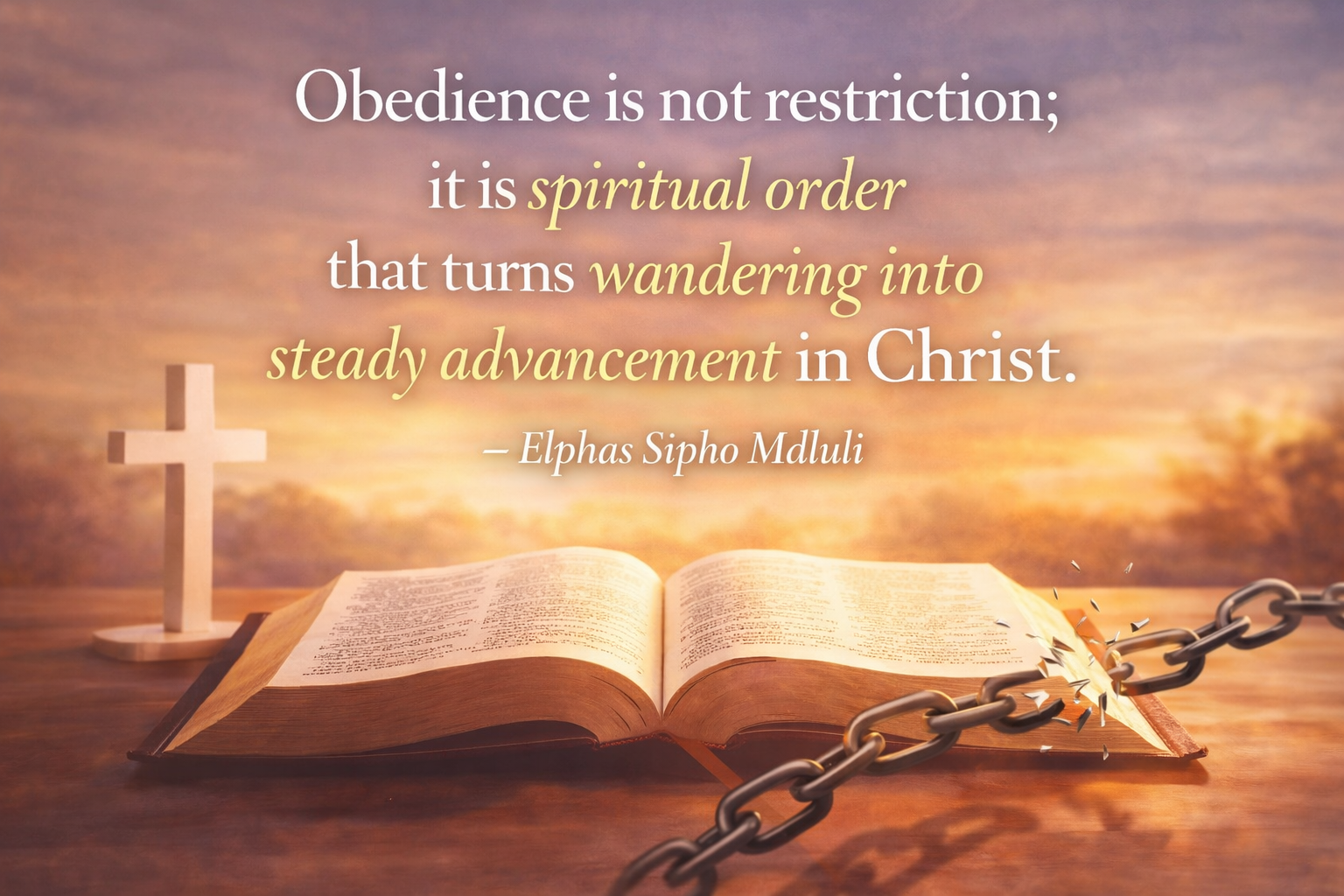
    “Obedience is not restriction; it is spiritual order that turns wandering into steady advancement in Christ.”
    — Elphas Sipho Mdluli
    Open Bible with an obedience quote overlay, symbolising spiritual order and steady advancement in Christ.

    How to Use These Quotes & Declarations

    Use the quotes for meditation and journaling. Speak the declarations slowly, as formed prayers—meant to build steady alignment rather than emotional intensity. If you are seeking a structured growth pathway inside the Church, begin with Start Foundations, and continue through the Discipleship Pathway.

    12 Quotes for Spiritual Order & Advancement

    Read one quote per day, then write one obedience step that makes it concrete.

    Quote 1

    “Spiritual growth becomes steady when obedience becomes a practiced response, not an occasional moment.”

    — Elphas Sipho Mdluli
    Quote 2

    “Hearing truth is the doorway; obedience is the structure that makes truth livable.”

    — Elphas Sipho Mdluli
    Quote 3

    “God’s direction is not a limitation—His voice is the path that protects your progress.”

    — Elphas Sipho Mdluli
    Quote 4

    “Alignment precedes advancement; increase without order becomes instability.”

    — Elphas Sipho Mdluli
    Quote 5

    “Delayed obedience often looks like waiting, but it quietly extends the journey.”

    — Elphas Sipho Mdluli
    Quote 6

    “Obedience reduces resistance, and reduced resistance feels like acceleration.”

    — Elphas Sipho Mdluli
    Quote 7

    “You cannot build mature discipleship on inspiration alone—obedience is the rhythm that sustains growth.”

    — Elphas Sipho Mdluli
    Quote 8

    “Private order produces public stability; a disciplined heart becomes a refuge for others.”

    — Elphas Sipho Mdluli
    Quote 9

    “God does not bless disorder to prove love—He forms order to protect your future.”

    — Elphas Sipho Mdluli
    Quote 10

    “Obedience is love made visible—faith becomes reliable when it becomes practiced.”

    — Elphas Sipho Mdluli
    Quote 11

    “Christ enables obedience from within; formation is not self-effort, it is Spirit-empowered alignment.”

    — Elphas Sipho Mdluli
    Quote 12

    “The reward of obedience is not only what God gives, but the clarity of who He reveals.”

    — Elphas Sipho Mdluli

    Declarations for Steady Spiritual Growth

    Speak these declarations as a measured practice. If you need guidance or prayer support while taking a step of obedience, reach out through Prayer & Pastoral Care.

    1. I declare that I hear the voice of the Lord with clarity, and I respond with faithful obedience.
    2. I declare that obedience orders my life, and my spiritual growth becomes steady and measurable.
    3. I declare that every form of resistance is broken, and my heart yields quickly to Christ.
    4. I declare that my obedience shortens unnecessary detours, and I will not wander in delay.
    5. I declare that alignment comes before increase, and my life will carry God’s blessings with maturity.
    6. I declare that my private life is disciplined, and public stability will be the fruit of obedience.
    7. I declare that truth is not only heard by me; it is practiced by me until it forms my character.
    8. I declare that Christ strengthens me from within, and my obedience flows from love, not pressure.
    9. I declare that my schedule reflects my spiritual priorities, and my time is redeemed for God’s purpose.
    10. I declare that obedience sharpens my spiritual sensitivity, and I recognize the Lord’s leading.
    11. I declare that I belong to a forming community, and I grow through worship, accountability, and service.
    12. I declare that I will not drift into maturity; I will grow into it by living what God has spoken.

    Grow Deeper

    Take Your Next Step in Spiritual Growth

    Growth in Christ is intentional. Choose a pathway that strengthens your foundation and develops consistency in your walk with God.

    Leadership Closing: You do not drift into maturity by hearing truth—you grow into it by living what God has spoken.
    If you are ready to belong and build consistency, begin by connecting with our church community, and plan your visit through our branches.
  • The Difference Between Believing and Being Formed: Why Spiritual Maturity Requires Structure

    The Difference Between Believing and Being Formed: Why Spiritual Maturity Requires Structure

    Discipleship & Spiritual Growth • Formation Guide

    The Difference Between Believing and Being Formed: Why Spiritual Maturity Requires Structure

    Many believers have sincere faith, yet quietly sense a lack of spiritual structure. This guide clarifies the difference between believing and being formed—and outlines a pathway toward stable Christian maturity.

    Focus: believing vs spiritual formation Keywords: discipleship • maturity • structure Theme: ordered life
    Open Bible and journal representing spiritual formation and Christian maturity
    Spiritual maturity begins when belief is shaped into structure.

    Key Takeaways

    • Believing begins the journey; spiritual formation builds maturity through repeated rhythms and obedience.
    • Structure is not legalism; it is love expressed through consistent practice under Christ.
    • Discipleship grows best in community; formation is strengthened through guidance, accountability, and belonging.

    1) Magnetic Opening — Name the Internal Tension

    Many believers genuinely love God, affirm the truths of Scripture, and can describe the moment they first believed—yet quietly sense that their spiritual lives lack structure. They pray, but inconsistently. They attend church, but without a clear pathway. They read the Bible, but without a rhythm that shapes their mind and habits. Over time, a tension forms: “If I truly believe, why do I still feel spiritually unsteady?”

    This is not the tension of hypocrisy. It is the tension of sincerity without formation—faith without an ordered way of life. It is the gap between conversion and maturity, between agreeing with truth and being shaped by truth. And for spiritually serious believers, that gap becomes increasingly uncomfortable, because the Spirit stirs a desire not merely to know Christ, but to become like Him.

    Believing vs Spiritual Formation: What Changes After Conversion?

    Conversion brings real life—new birth, forgiveness, reconciliation with God. Yet the New Testament consistently shows that new life is meant to be formed into a stable way of living. Believing is the entrance; formation is the building process. One can sincerely believe and still remain spiritually reactive, because maturity grows through repeated practice, structured obedience, and life lived within discipleship.

    When belief is not formed, faith often stays in the realm of intention. But when belief is formed, faith becomes embodied: Scripture shapes decisions, prayer becomes rhythm rather than rescue, and obedience becomes architecture rather than mere restriction. This is where Christian maturity begins to appear—not as spiritual performance, but as spiritual stability.

    2) Pastoral Recognition

    If you recognize yourself here, you are not alone—and you are not necessarily failing. Often, this tension is an invitation into the next stage of discipleship.

    In many seasons, believers interpret the lack of progress as personal weakness: “Maybe I’m not disciplined enough.” But Scripture reveals something more hopeful: spiritual growth is not meant to be sustained by willpower alone. God forms His people through means—through Word, community, practices, obedience, and repeated rhythms that reshape the heart over time.

    A believer can be sincere and still be unformed. A believer can be saved and still be unstable. Not because salvation is incomplete, but because maturity requires development. The Christian life is not only a message to believe; it is a life to be built.

    Formation Question

    So the question is not merely, “Do I believe?” The deeper question is: “Am I being formed?”

    3) Biblical Foundation

    Anchor Scripture — Romans 12:1–2

    Romans 12:1–2 calls believers to present themselves to God and to be “transformed” by the renewing of the mind. This is not a one-time decision. It is a lifelong process. The language of transformation implies ongoing formation—an inner reshaping that results in a different way of living and discerning.

    Believing begins the journey. Formation sustains and matures it.

    Supporting Scriptures (with theological clarity)

    1

    James 1:22–25 — The Word must be done, not only heard.

    James confronts the danger of spiritual familiarity without obedience. Hearing without doing forms a self-deception: the believer feels nourished without actually being changed. Formation requires embodied response—truth practiced until it becomes part of us.

    2

    Ephesians 4:11–16 — Maturity is grown within a discipled community.

    Paul describes the church as a formation environment where leaders equip the saints, and believers mature “to the measure of the stature of the fullness of Christ.” Maturity is not merely private improvement. It is corporate development—shaped by teaching, modeling, correction, and shared life.

    3

    Luke 6:46–49 — Obedience is the foundation that withstands storms.

    Jesus distinguishes between those who hear His words and those who do them. The obedient person is compared to a builder who digs deep and lays a foundation. This teaches that stability is not produced by inspiration; it is produced by structured obedience.

    4

    1 Timothy 4:7–8 — Godliness involves training.

    Paul’s instruction is direct: “Train yourself for godliness.” Training assumes structure, repetition, and deliberate effort. Grace is not opposed to effort; it is opposed to earning. Formation is the fruit of grace applied through disciplined practice.

    5

    Colossians 1:28–29 — The goal of ministry is mature believers.

    Paul’s aim is not simply converts, but believers presented “mature in Christ.” Maturity is the intended outcome of Christian teaching and shepherding. This means it is possible to remain immature—and it is also possible to grow, through a clear pathway.

    Summary: Faith is received by believing, but maturity is built through formation. Belief opens the door. Formation builds the house.

    4) Formation Framework (Core Section)

    To understand the difference between believing vs spiritual formation, it helps to see discipleship as a structured journey rather than a vague intention. Below are five movements that guide believers from sincere faith into stable maturity.

    1

    Movement 1: Conversion Gives Life; Formation Gives Shape

    Explanation: Believing in Christ brings new life—new birth, forgiveness, reconciliation with God. But new life must be given shape, just as a child must be nurtured into adulthood. Without formation, believers often remain spiritually reactive: strong emotions in worship, deep conviction after sermons, yet little lasting change in habits, speech, relationships, or stewardship.

    Biblical grounding: Jesus speaks of being born again (John 3:3–6)—the beginning. But He also commands disciples to learn His way of life (Matthew 11:28–30), taking His yoke—an image of shared discipline and guided formation.

    Leadership insight: Leaders regularly observe this: believers can be highly responsive to spiritual moments while remaining unstructured in daily life. Over time, instability is not cured by more emotion, but by clearer formation.

    Life application: Ask yourself: Has my faith given me a new identity—but have I built a new pattern of living? Formation is where identity becomes practice.

    2

    Movement 2: Foundations Before Increase

    Explanation: Many believers want spiritual power, deeper revelation, and stronger authority, but resist foundational disciplines. Yet the Christian life is built in order. Depth is not achieved by intensity; it is achieved by roots.

    Biblical grounding: Paul speaks of being “rooted and built up” (Colossians 2:6–7). Rooted first. Built up next. In the parable of the soils (Mark 4:14–20), growth is hindered not by lack of seed, but by shallow soil and competing thorns. Formation is the work of deepening the soil.

    Leadership insight: The church is often asked to deliver mature outcomes without foundational processes. But discipleship is not magic—it is cultivation. Where foundations are missing, leaders should not shame believers; they should offer pathways.

    Life application: If you feel spiritually inconsistent, do not start by chasing more complexity. Start by rebuilding foundations: Scripture intake, prayer rhythm, fellowship, obedience, accountability.

    3

    Movement 3: Spiritual Rhythm Is the Home of Maturity

    Explanation: A rhythm is not legalism. It is love structured over time. Without rhythm, believers live by spiritual impulse: they engage when they feel stirred and withdraw when they feel tired. But maturity requires a stable cadence—daily, weekly, and seasonal patterns that keep the heart warm and the mind renewed.

    Biblical grounding: Jesus practiced regular withdrawal for prayer (Mark 1:35), attended synagogue “as was His custom” (Luke 4:16), and taught persistent prayer (Luke 18:1). The early church devoted themselves to practices (Acts 2:42)—teaching, fellowship, breaking of bread, prayers. Devotion implies structure.

    Leadership insight: Rhythm protects believers from the tyranny of mood. It creates spiritual predictability: not mechanical, but faithful. It is how belief becomes a formed life.

    Life application: Build a simple rhythm you can sustain:

    • Daily: Scripture + prayer (even short, but consistent)
    • Weekly: gathered worship + fellowship + reflection
    • Monthly: extended review of your spiritual direction
    • Seasonal: fasting, retreat, or renewed consecration

    This is not about doing more. It is about doing what matters, consistently.

    4

    Movement 4: Obedience Is Structure, Not Mere Restriction

    Explanation: Many believers see obedience as limitation. But biblically, obedience is architecture. It is the visible form of love. When obedience is missing, spiritual life becomes abstract—belief without embodiment.

    Biblical grounding: Jesus says, “If you love Me, you will keep My commandments” (John 14:15). He also warns that hearing without doing produces collapse (Luke 6:49). Obedience is not the enemy of intimacy; it is the shape of intimacy.

    Leadership insight: A common discipleship breakdown occurs when believers want spiritual experiences but resist God’s instructions in relationships, integrity, sexuality, speech, finances, forgiveness, and stewardship. Yet these are the very places where Christlikeness is formed.

    Life application: Choose one obedience area and structure it:

    • If your speech needs sanctification, practice restraint and repent quickly.
    • If your time is chaotic, order it with prayer and planning.
    • If relationships are strained, pursue confession and reconciliation.

    Spiritual maturity is not measured only by what you know, but by what you consistently obey.

    5

    Movement 5: Growth Through Discipleship, Not Isolation

    Explanation: Believing can happen in a moment. Formation rarely happens alone. God often uses community as His workshop—where love is practiced, humility is learned, and character is tested.

    Biblical grounding: Hebrews urges believers not to neglect gathering, but to encourage one another (Hebrews 10:24–25). Proverbs teaches that wisdom is refined through relational sharpening (Proverbs 27:17). Ephesians presents maturity as a body-building process, not a private project (Ephesians 4:16).

    Leadership insight: Many believers stagnate because they remain consumers of spiritual content rather than participants in discipled community. Online teaching can inform, but it cannot fully form. Formation requires proximity—being known, corrected, encouraged, and guided.

    Life application: If you desire a clear structure for growth, connect to our structured discipleship pathway. And if you are seeking belonging and relational formation, you can connect with our church community.

    5) Ordered Life Integration

    Spiritual formation is not only about “being spiritual.” It is about becoming ordered under God. An ordered life is a life aligned with Christ in priorities, disciplined in habits, faithful in stewardship, and purposeful in influence. This does not mean perfection. It means direction. It means your faith is not merely internal conviction, but an external pattern.

    • Alignment: Your decisions increasingly match your confession.
    • Discipline: Your habits support your calling rather than sabotage it.
    • Stewardship: Your time, finances, gifts, and relationships are handled with responsibility.
    • Influence: Your life becomes quietly weighty—others are strengthened by your stability.

    This is why believing vs spiritual formation matters: believing can remain private, but formation becomes visible. It rearranges your days. It shapes your responses. It reforms your character. It turns faith into a mature life.

    6) Practical Formation Guidance

    Formation moves from information into transformation when you embrace practices that shape you over time. Below are structured tools to guide your growth with steadiness.

    Reflection Questions (for honest self-assessment)

    1. Where do I currently rely on spiritual emotion more than spiritual rhythm?
    2. Which area of obedience do I postpone while still expecting growth?
    3. What practices have actually formed me in the last 90 days?
    4. Do I have a discipleship pathway—or only good intentions?
    5. In what ways is my life becoming more ordered under Christ?

    Spiritual Practices (simple, sustainable, formative)

    • Scripture Rhythm: Read daily with a plan, not random selection.
    • Prayer Structure: Use a pattern (adoration, confession, thanksgiving, requests) to avoid drifting.
    • Weekly Sabbath Space: Create time for worship, rest, reflection, and relational renewal.
    • Confession & Repentance: Practice quick repentance; do not let sin normalize.
    • Service in Community: Choose a consistent way to serve; maturity grows through responsibility.

    Leadership Applications (for those who lead or aspire to lead)

    • Model rhythms publicly—without performance.
    • Build environments where obedience is celebrated as wisdom, not treated as mere restriction.
    • Measure growth by fruit and stability, not by charisma.
    • Teach doctrine with application: truth should land in habits, not only in notes.
    • Emphasize process: foundations, repetition, accountability, community.

    Clear Life-Ordering Steps (consistency over intensity)

    1. Choose a Rule of Life (simple):
      • Daily Word + prayer (fixed time)
      • Weekly gathered worship + one fellowship connection
      • Monthly review of habits and spiritual direction
    2. Name one formation priority for 30 days: Examples: prayer rhythm, Bible plan, speech discipline, forgiveness practice, financial stewardship, purity boundaries.
    3. Add accountability: Formation accelerates when someone can ask, “How is your walk?” with permission to tell the truth.
    4. Submit to a pathway: Not as control, but as wisdom. A pathway gives shape to growth.

    Walking the Path of Intentional Discipleship

    Spiritual maturity is not a vague destination; it is a walked path. Many believers grow best when they have three lanes of support: learning, community formation, and guided depth.

    A

    Intellectual Growth (Freedom Hub)

    Those desiring deeper biblical understanding often benefit from structured teaching that clarifies theology, discipleship, and spiritual growth. When your mind is renewed with order and depth, your life gains direction. Freedom Hub can serve this lane by providing a learning environment that strengthens understanding without replacing embodied discipleship.

    B

    Spiritual Formation (Church)

    Formation becomes sustainable when it is lived among God’s people—where truth is practiced, character is shaped, and discipleship is relational. This is why our structured discipleship pathway exists. If you are seeking belonging and a spiritual home where growth is practiced within community, you can connect with our church community. If you are ready to rebuild foundations with clarity and steadiness, you may begin with our Foundations Class.

    C

    Guided Depth (Patreon)

    Some believers are not looking for more content—they are looking for a formation environment that supports consistent growth with guided structure. Patreon can function in that way: a space for believers who desire intentional depth, structured reflection, and ongoing guidance that reinforces a formed life.

    Leadership Closing

    Believing brings you into the family of God. Being formed builds you into the maturity of Christ. The church was never meant to produce only sincere believers—it was designed to raise stable disciples whose lives visibly carry the weight of obedience, rhythm, and stewardship.

    You do not drift into spiritual maturity—you grow into it through intentional discipleship.